

 Nearshore Americas
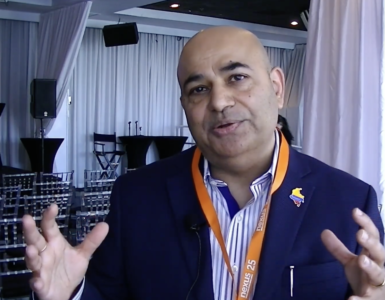
Mario Chaves knows what it takes to build in nearshore at scale. As co-founder of Avantica, he helped build one of the region’s best-known technology services companies, starting in Costa Rica and expanding across Latin America. So when he joins a board, the question is not just who he joined, but why now.
Chaves says he does not join companies casually. He looks for businesses where he can add value, where the people are worth working with, and where the company is still early enough for experience to matter.
“I don’t want to just join a company because they asked me to,” Chaves said. “What I look for is that they’re in a space that I know I can add some value, are fun people to work with, and a company that’s small enough where I can relate to the path that we were on.”

What caught his attention was not just the ambition, but the infrastructure behind it. Chaves said Qualitara is ahead of its size in the way it has built out “processes and systems, and checks and balances,” the kind of operational foundation that most companies at this stage overlook entirely.
That maturity matters because Chaves sees the real test as what comes next. Scaling a services business is never just a sales problem.
“The challenge is how do you go about getting that growth to happen,” he said. “And what are the adjustments that you need to make as you navigate those waters?”
What he saw in Qualitara starts with the fact that the company is pushing against the old nearshore playbook.
For years, the pitch in tech has been simple: pay less, build more. Qualitara is trying to move away from that model.
The Miami-based, Costa Rica-anchored company is blunt with prospective clients. “If you want the cheapest option and this is a cost play — don’t hire us,” co-founder Mario Siman said. “We can just stop the conversation right there.”
That stance shapes how Qualitara positions itself. The company is not trying to be the best low-cost option in Central America. It is trying to be the best option, period.

Siman said the company’s approach was shaped in part by the 2021 hiring bubble, when competitors scaled aggressively and made promises backed more by cash than discipline. Qualitara chose not to follow.
“The real cost of failure in this industry is growth at all costs,” Siman said.
Qualitara does not position itself as a volume staffing firm. It builds nimble, high-performance squads designed to deliver specialized results.
“We’re not volume recruiters,” Siman said. “We’re in a business of creating squads of five to six people that are going to give you outlier results.”
That model limits how fast the company can grow, but that is part of the point. Qualitara has chosen selectivity over scale for its own sake. “We’re saying no to 40% of the revenue pipeline,” Siman said, because many prospects do not fit the company’s expectations around how teams are built and supported.
The company argues that this discipline compounds. It has attracted talent from firms such as Google and Microsoft, and Siman believes strong people attract more strong people.
“A-players bring more A-players on board,” he said. “We’ve built an unfair and compounding hiring advantage.”
Qualitara also puts accountability at the center of delivery. It benchmarks performance internally and expects clients to measure outcomes, not just effort.
“We’re metric-driven,” Siman said. “We want customers to measure us and keep us accountable.”
For Chaves, what Qualitara is building connects to a set of principles he has seen proven over decades in the services business. Customer satisfaction is not a soft metric. It is the growth engine.

“First and foremost, make sure the customer is satisfied,” Chaves said. In services, he added, relationships compound. The director who shows trust today becomes the executive who later brings a larger opportunity.
That is also why he watches concentration risk and churn as closely as revenue growth.
“More than 20% (revenue concentration) I find very risky,” he said. Healthy growth means expanding across clients so that no single relationship can destabilize the company.
For a services business to keep scaling, he added, most of the prior year’s revenue should still be there at the start of the new year — and leaders need to understand why any part of it disappears.
Those fundamentals matter even more because Chaves believes nearshore is entering a different era. As AI reshapes software development, he expects the way companies build, hire and deliver to change quickly, putting pressure on firms built around older service models.
“The whole way that you do software development is changing,” Chaves said. “It’ll probably be radically different in five years, or maybe less.”
That is why he sees an opening for companies that are structurally prepared, not just commercially polished. His warning to the industry is straightforward: adapt or get left behind. But he also shares Siman’s view that growth without discipline is a trap.
Chaves’s decision to join Qualitara is not just an endorsement of the company. It is a signal about where nearshore is heading. The next winners will not be the firms that sell the lowest rate. They will be the ones built for quality, accountability and change. That is the bet Qualitara is making — and the one Chaves is backing.






Add comment