
 Narayan Ammachchi
Power grids across Latin America are starting to crack under the sudden surge in electricity demand from AI-driven data centers.
Nowhere is this more widely visible than in Mexico. In El Marques, a small town in the state of Querétaro, Mexico authorities are now scheduling power cuts just to keep the system from collapsing.
This is a town of barely 1,500 people. Yet it is now packed with dozens of data centers built by giants like Microsoft, Amazon, Google, along with operators such as Ascenty and Equinix.
Querétaro already hosts around 18 data centers, consuming between 200 and 250 MW of electricity. Another 10 are under construction. Once they go live, demand is expected to cross 1 GW by 2028 — a massive jump for a region that was never designed for this kind of load.
On paper, the expansion looked clean. Many data center operators had promised renewable energy support or on-site green power generation.
But reality is moving slower. An investigation by the Thomson Reuters Foundation found that Mexico’s renewable capacity is not expanding fast enough to keep pace with AI-driven demand. As a result, several operators are quietly falling back on fossil fuels.
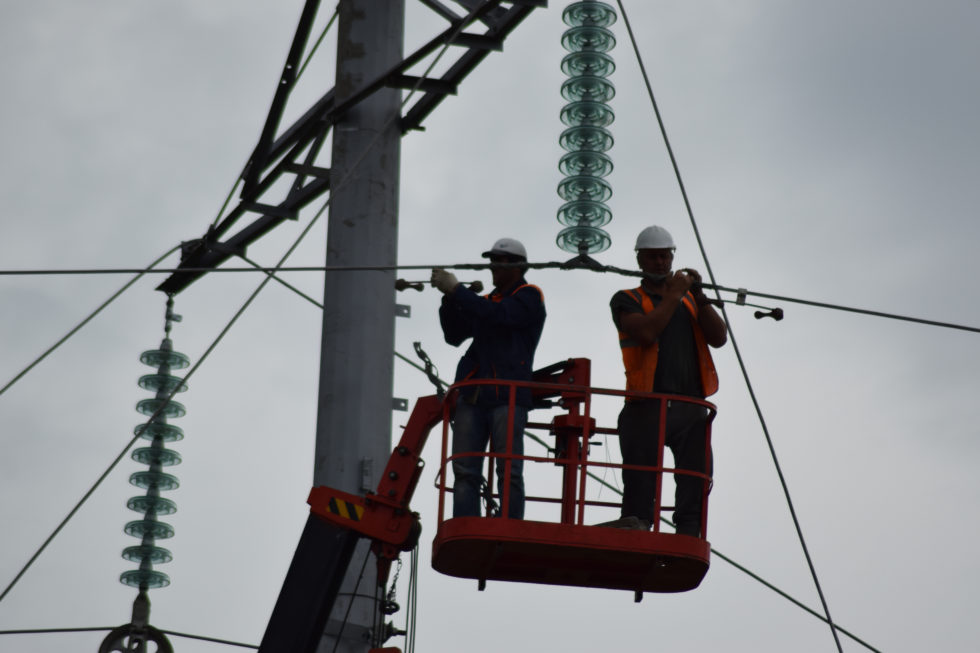
The grid itself is another weak link. Much of the infrastructure was already old. Now, with new high-load facilities plugged in, transmission lines are getting pushed beyond their limits. During peak usage, they simply overload — and that’s when blackouts hit.
“We don’t know what’s going on. They haven’t told us what’s happening with the power outages we’ve had. Before, a year or two years ago, we didn’t have any power issues. Now, it’s been twice a week. And they are long; can be 4 hours, 5 hours, even a full day,” reported Spanish news outlet Publica quoting a local resident.
“This is a perfect use case of mismatched velocities,” said Stanislav Kazanov, Head of GRC, Cybersecurity & Sustainability, Head of Data at Innowise, a Warsaw, Poland-based IT consultant.
“Hyperscalers are looking to invest capital and build AI based data centers in 18 to 24 months. State owned utility companies and the national grid expansion projects are having timelines of 5 to 10 years.”
“You can’t solve an AI spike in demand in 2026 with a transmission line that won’t be in service until 2032.”
Brazil’s problem is quite different
Brazil accounts for more than 40% of Latin America’s data center investments. This is driven by local players like Ascenty and OData, working closely with global tech firms such as Oracle, Amazon, and Meta.
Here, the issue is not power generation but delivery. The country has abundant electricity, largely from hydropower, but its transmission network is aging and struggling to carry that power where it’s needed.
The country has even launched an AI City in Rio’s Olympic Park. It draws power from a national grid that is 80–90% renewable. More importantly, Rio is actually sticking to its promise — every megawatt consumed is matched by renewable energy fed back into the system.
Yet, even here, the bottleneck is shifting to infrastructure. “The pattern across Latin America is very similar… The constraining factor for data center development is not computing availability or capital. Instead it is grid capacity, transmission infrastructure,” says Arif Gasilov, Partner at Gasilov Group, an ESG consultant based in New York City.
Brazil may have around 12 GW of available transmission capacity and an 83% renewable energy mix — strong fundamentals that are attracting up to $350 billion in planned investments. But the key question remains unresolved: can the transmission network expand fast enough to keep up with demand, Gasilov questioned.
Chile tells a similar story — but with an ironic twist. “Chile is generating more clean power than its grid can deliver to where the data centers need it”.
The country is producing large volumes of renewable energy — 63% of its electricity in 2025 came from clean sources. But the transmission corridors from energy-rich regions like Atacama and Patagonia to demand hubs like Santiago are congested, Gasilov added.
The result: wasted energy. Renewable curtailment reached 6,084 GWh in 2025, up 7.8% year-on-year.
This widening gap between where power is generated and where it is needed is becoming a defining challenge across the region.
The Solution: Smaller Data Centers
One possible workaround is to rethink where data centers are built in the first place, said Phil Dion, EVP of Energy & Infrastructure Solutions at Relativity Networks.
He says companies don’t have to rely only on old, fixed fiber routes anymore. Instead of concentrating massive facilities in big cities, they can build smaller data centers in remote or newly connected areas where fiber has just arrived.
This changes the equation. Data can still move at ultra-low latency, even across long distances. But infrastructure pressure gets spread out.
In practical terms, it means companies can tap into underused regions, avoid overloading urban grids, and build faster — often at lower cost.





Add comment