
 Narayan Ammachchi
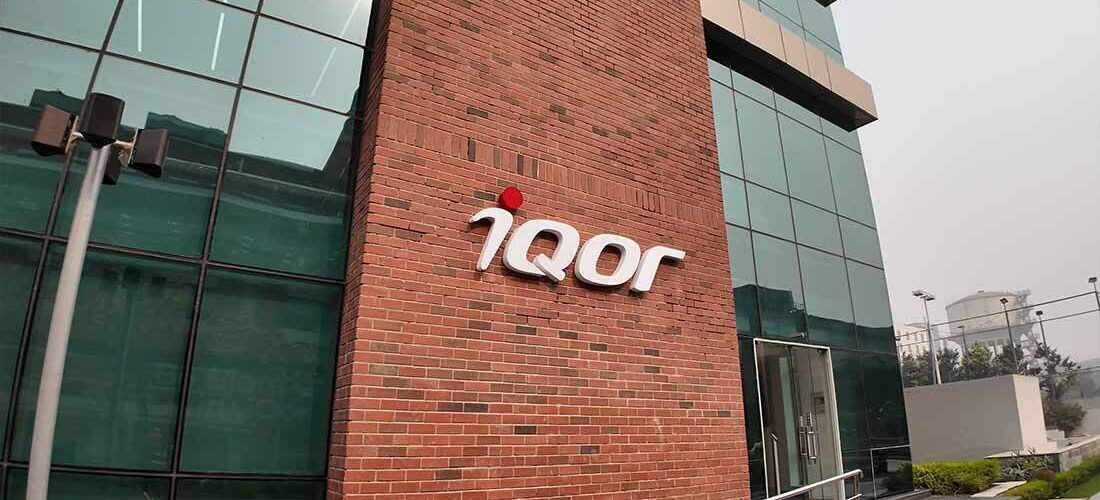
iQor CXBPO has made another acquisition within six months, following its purchase of JumpCrew in August 2025, as the company accelerates expansion after years of restructuring. The Fort Lauderdale, Florida-based BPO firm is also set to launch operations in Egypt this year.
The moves underline a sharp turnaround for iQor since it emerged from Chapter 11 bankruptcy protection in 2020.
In a candid conversation with Nearshore Americas, iQor Chief Executive Officer Chris Crowley detailed how the company rebuilt its balance sheet and operations. He said iQor is now an $800-million business, has cleared most of the hurdles that once constrained growth, and is positioned to deliver mid-single-digit growth with a low-debt structure.
NSAM: Why did you choose to acquire OP360?
Even before we got into serious discussions, what stood out was the cultural alignment. From the very top — Tim Boylan, the CEO, Ben Roberts, the President and COO — all the way through their management, sales, and support teams, the culture was clearly people-centric.

I’ve been in this industry for over 25 years, close to 30 now, and you develop a sense for companies that genuinely invest in their employees and clients. I strongly believe this business is about investing in people, relationships, and consistently delivering the best work for clients and their customers. That came across very clearly at OP360.
Another important factor was that OP360 was willing to become part of a larger organization that could offer more opportunities for its people and enable its clients to scale further. From our perspective, that made it a good strategic fit.
From iQor’s standpoint, the client mix was also attractive. We are very strong in retail, financial services, utilities, and consumer services. OP360 has strength in healthcare and technology. We both have success in retail, but without heavy overlap. That allows us to expand our customer base and deepen vertical expertise without duplication — we are complementary rather than competitive.
Finally, when you look at our AIQ platform at iQor — which delivers AI-driven insights at the people, process, and data levels — OP360 gains access to advanced analytics and AI capabilities. This allows us to expand AI and data-led services across their customer base as well. Overall, it was a strong strategic and cultural fit for both companies.
NSAM: Isn’t there an operational overlap between iQor and OP360, given both operate in the Philippines, India, Colombia, and the US?
Let me start with the US. iQor has a very strong work-from-home and hybrid delivery model, combined with brick-and-mortar operations. OP360 did not have that capability, even though they are headquartered in the US. This gives them immediate access to a delivery model that works very well for certain types of clients.
Now, regarding global locations — while we operate in the same countries, there is very little overlap at the city level.
Take the Philippines. iQor already has 17 sites there and is one of the largest CX providers in the country. OP360 operates in three Philippine locations, and only one of them — Davao — overlaps with us. In fact, we were already looking to expand capacity in Davao, so this was a natural addition.
More importantly, OP360 gave us access to Cagayan de Oro and Cebu — two locations where we did not previously operate. As a result, our Philippine footprint expands to nearly 20 sites, including two completely new markets. This significantly strengthens our scale and reinforces the Philippines as a critical delivery geography for iQor.
In India, OP360 was looking to expand capacity. With our two large facilities in Noida, that expansion becomes immediate.
In Colombia, iQor operated in Medellín and OP360 in Barranquilla. Together, we now have two highly desirable delivery locations that customers and prospects actively seek.
So while there is country-level overlap, there is minimal overlap at the city level. Instead, the acquisition expands our operational footprint.
Additionally, we are launching operations in Egypt in the first quarter. Egypt will become a significant new delivery location for us in 2026, supporting both English and multilingual services for EMEA and US clients. This also opens new expansion opportunities for OP360’s clients.
NSAM: This is iQor’s second acquisition since emerging from Chapter 11. Do you expect more acquisitions going forward?
Yes, you’re correct. We completed two acquisitions: JumpCrew and OP360. The earlier acquisition was very strategic — it allowed us to enter the growth-as-a-service space. We wanted to build an integrated sales and marketing solution for small and medium-sized businesses, particularly in the US. That segment fits extremely well with domestic outsourcing.
Alongside acquisitions, we are also growing organically. We met our organic revenue and profit growth targets in 2025.
Going forward, our strategy remains dual-tracked: disciplined acquisitions alongside strong organic growth. We will continue to be thoughtful so that acquisitions do not disrupt our ability to serve clients or impact organic momentum.
As we enter 2026, iQor is an $800-million-plus company, profitable, with mid-single-digit growth expected. We’re excited about organic prospects, but we will continue to evaluate acquisitions that add strategic value.
NSAM: What is iQor’s current headcount?
Globally, we have approximately 45,000 to 48,000 employees. Of that, around 3,500 employees are joining us directly from OP360.
NSAM: S&P Global cited heavy exposure to consumer electronics and retail clients as a key factor behind iQor’s bankruptcy during Covid-19. Has your client mix changed since then?
I joined iQor as CEO at the beginning of 2024. At that time, the company was carrying far more debt than was appropriate for a growth business.
A key part of my mandate was to restructure the company’s capital profile. We brought in new equity partners and completely changed the capital structure. Today, iQor is a low-debt, highly profitable company with strong EBITDA and revenue growth, which allows us to reinvest meaningfully into the business.
Regarding consumer electronics exposure — that stemmed from an acquisition made well before my time. By the time I joined, that exposure had already been resolved and no longer existed.
I also believe the management team had already aligned the company with the right verticals and CX-BPO approach. Many of the operational challenges had been addressed. What was missing was the right equity and debt structure, which we fixed by mid-2024.
That restructuring is why you now see iQor in a position to grow, invest, and make acquisitions. Today, we have a far more diversified client base across industries and geographies.
NSAM: AI tools are increasing pressure on agents through constant monitoring and performance scoring. How does iQor address employee stress related to AI adoption?
At iQor, we operate our AI platform called Infinity AIQ, which consists of People IQ, Process IQ, and Insights IQ.
Our philosophy is to use AI to enhance the employee experience — not to make it more stressful.
First, we use AI to streamline hiring and recruitment, making it easier and faster for people to join iQor. Second, Process IQ significantly improves training. Agents have continuous access to refresher courses and support tools, which builds confidence and preparedness on the job.
We also partner with language-assistance providers that help with accent harmonization and communication clarity. This has reduced stress for agents while improving customer satisfaction and agent performance.
Finally, Insights IQ provides real-time feedback on customer sentiment and behavior during calls. This helps agents understand why customers are reacting the way they are, rather than simply flagging errors.
Overall, employee satisfaction and performance have improved since deploying these tools. AI, in our environment, is designed to support people — not police them.






Add comment