
 Narayan Ammachchi
Bogotá has emerged as Latin America’s most cost-competitive city for companies seeking to fit out premium office space, while Buenos Aires ranks among the region’s most expensive markets, according to Turner & Townsend’s Global Office Fit-out Cost Guide 2026.
Fitting out one square meter of premium office space in Colombia’s capital costs an average of US$1,759. A comparable office in Buenos Aires costs US$5,861 per square meter.
Turner & Townsend did not identify reasons for Bogotá’s low costs, though industry executives point to a combination of lower professional fees, favorable currency dynamics and abundant supply.
Mauricio Romero, a Bogotá-based senior office consultant for global commercial real estate firm Newmark Group, told Nearshore Americas that design and engineering costs in the Colombian capital are among the lowest in Latin America. “A historically weaker Colombian peso reduces USD-denominated costs for labor and many domestically sourced inputs.”
The city also benefits from ready access to construction materials used in modern office projects, including drywall systems, glass, flooring and millwork.
Office market conditions are providing an additional advantage. Elevated vacancy levels in parts of Bogotá’s premium office sector have increased tenants’ negotiating power. Landlords are offering rent-free periods, contributions toward interior customization and, in some cases, fully fitted offices to attract occupiers.
The incentives are reducing upfront costs for companies seeking higher-quality office space.
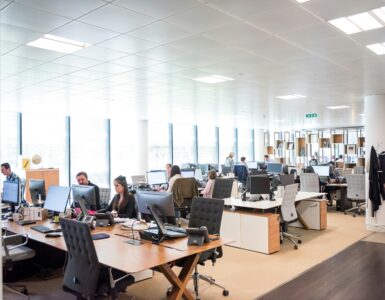
According to Turner & Townsend, lower occupancy costs are attracting service-sector firms as employers continue expanding office space to accommodate workers returning from remote arrangements. Rather than leasing larger amounts of conventional office space, many companies are opting for smaller, higher-specification workplaces.
The trend has gained momentum since the pandemic as employers seek office environments that encourage in-person attendance.
Argentina’s Expensive Market
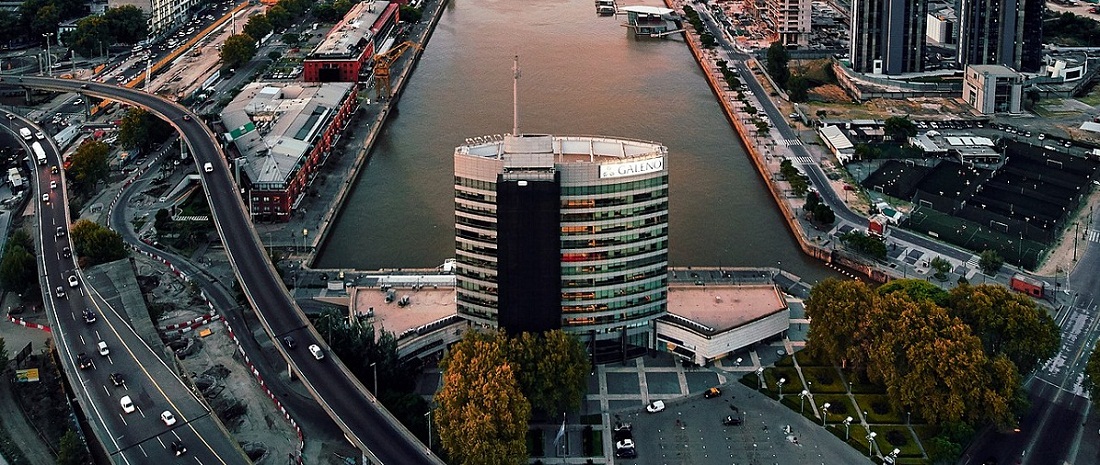
Argentina’s ongoing economic volatility and currency struggles have made its commercial real estate market exceptionally expensive. In Buenos Aires, building and furnishing premium office space runs at costs comparable to New York or London.
In some cases, these tariffs can raise prices by as much as 150%, according to the report. As a result, developers and tenants often pay far more for identical materials and office fit-outs than they would in comparable cities across the region.
Other regional markets are being shaped by their own dynamics. Chile’s office market, for instance, is benefiting from investment linked to the country’s mining sector. Turner & Townsend estimates that investment in its copper industry could reach US$104.5 billion through 2034, supporting future demand for commercial real estate.
Santiago is the region’s third-most expensive office fit-out market among the cities surveyed, with costs averaging US$3,321 per square meter. Montevideo follows at US$3,187 per square meter.
In Mexico City, rising costs are being driven by limited availability of office space. “Premium fit-outs are often limited to smaller floor plans, and the squeezed availability is feeding into higher relative costs, which now average at US$2,237 per square meter,” the report said.
São Paulo is experiencing a different trend. Companies adopting hybrid work models are increasingly prioritizing office quality and location as they reassess workplace strategies. “The workforce values good transport links and surrounding amenities like bars and restaurants, and offering these is fundamentally unachievable with a retrofit if the building is in the wrong location,” the report said.
The shift comes as employers across Brazil, particularly in the financial and technology sectors, increase requirements for in-person attendance.
“Employers in the financial services and tech sectors are increasingly mandating in-person attendance. This has pushed clients to opt for higher-specification fit outs in the battle for talent – with attractive break-out areas and places to grab coffee or prepare food from home adding to costs.”






Add comment