
 Manoj Sharma
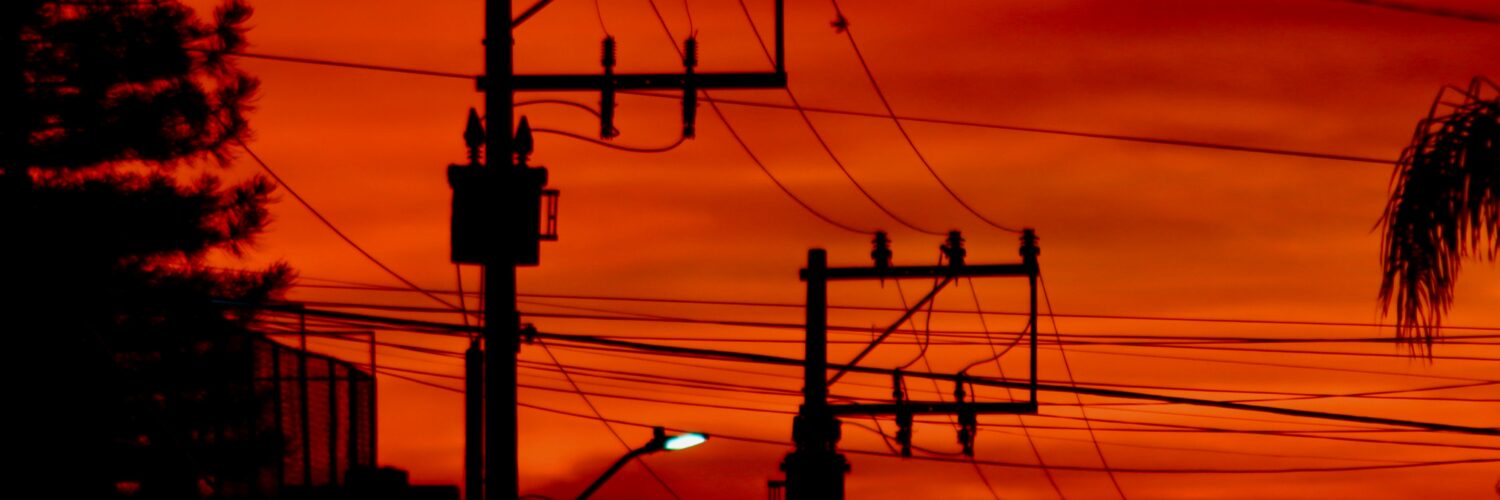
Mexico’s energy grid is buckling under years of neglect, and it’s impacting the very nearshoring boom it’s supposed to support, threatening the country’s image as a top outsourcing destination in Latin America. Recent waves of blackouts, power outages, and fluctuations have affected around 20 states, many of which house some of the biggest U.S. tech companies.
Morelos, Hidalgo, Puebla, Veracruz, Querétaro, San Luis Potosí, and the northern states of Tamaulipas, Nuevo León, and Coahuila have seen frequent power outages in recent months. Consistent disruptions have also occurred across the Yucatan Peninsula and Baja California Sur, partly due to a deficient distribution network. Many companies providing services to U.S. clients operate from these areas. Nuevo León, for example, houses many small and mid-size contact center and BPO companies. Querétaro is also a home base for several data centers, automotive, and aerospace companies.
Impact on Nearshoring Operations
Around 70% of planned industrial parks in northern and central corridors in Mexico face major energization delays beyond 2026, according to a report by Mexico Energy Partners. Repeated grid issues have affected both small and large businesses, which could dent Mexico’s image as a perfect nearshoring destination, say analysts.
Top US tech companies are making huge investments in data centers across Mexico. Amazon Web Services (AWS) will invest $5 billion in Querétaro, while Google will develop a data center in Querétaro. Equinix already operates three major data centers in Querétaro and Monterrey. Since data centers need reliable and abundant power, consistent power outages risk losing out on massive infrastructure opportunities.
We’ve seen it (power crisis) in two parts — particularly in the northern part, with respect to the northeast, but also in the Yucatán Peninsula, which is southeast, where we have a serious problem of power balancing — where we produce and where we need it — because of lack of infrastructure for connecting and transporting that electricity.
— David Robillard, Managing Partner at Robbilard Advisors

Mexico City-based David Robillard, Managing Partner at Robbilard Advisors, which advises nearshore companies on strategic risks and distribution, flags unreliable electricity access causing rolling brownouts as a critical issue, especially for companies that allow employees to work from home.
The northeastern region of Mexico and the Yucatan Peninsula are the worst-affected regions, he says, adding that access to reliable power during work hours is really an issue in some parts of the country. “We’ve seen it in two parts — particularly in the northern part, with respect to the northeast, but also in the Yucatán Peninsula, which is southeast, where we have a serious problem of power balancing — where we produce and where we need it — because of lack of infrastructure for connecting and transporting that electricity,” Robbilard told Nearshore Americas.
He says the problem is going to get worse because there’s a considerable lag expected between getting new infrastructure online and the brownouts being resolved. “So if you’re (companies) going to be hiring, you want to make sure that the area in which the people that are supporting have access to 24/7 reliable, and that the data, the public data as to what is the degree of reliability for electricity in a particular region.”
Enrique Cortés Rello, a director of the AI Hub at Tec de Monterrey in the Guadalajara, Mexico Metropolitan Area, says the problem is not so severe on the Pacific side — the western side of Mexico — and that it’s more local than country-wide. “Yucatán is special because it’s like a peninsula, the Caribbean side, that never had enough electricity transmission. So they’re building it, but there is a lack of that.”
Cortés Rello, however, warns of an impending power crisis even in metro regions if the power infrastructure is not upgraded in time. He points to a gigantic concentration of data centers in Querétaro near Mexico City. “Microsoft is there, Oracle is there, the banks are there, everybody’s there. And the problem is not electricity; it’s that it’s concentrated in a very small region, so there are transmission problems, and maybe also occasions where electricity goes out.”
Criticism and Sheinbaum Govt’s Plan
Amid the electricity crisis, the Sheinbaum administration has promised some serious reforms. The government-led Federal Electricity Commission (CFE), which oversees electricity services in Mexico, calls them localized disruptions, largely caused by bad weather, storms, or very high temperatures, rather than an infrastructure issue.
But critics argue the persistent power crunch in certain areas has been caused by the authority’s focus on expansion rather than maintaining the existing electrical grid. Data also shows that the authority spent 24% less on physical infrastructure in 2025 than in the previous year. In addition, the aging distribution equipment, including transformers, has taken a toll on the existing infrastructure.
However, things are expected to change. CFE held an unprecedented national working table in February 2026, in which it talked to representatives from 29 of Mexico’s 32 states. With a new campaign “CFE Conectada Contigo” (CFE Connected With You), the commission seems serious about solving the country’s grid crisis.
It’s aiming to renew electrical equipment with a broader 2024-2030 plan, under which it’ll invest $23.4 billion, of which $12.3 billion will be spent on generating 13,000 MW of power, while $7.5 billion will be spent on fixing the aging national transmission grid and $3.6 billion will be spent on distribution infrastructure. Under the government’s revival plan, CFE’s production has been mandated to increase to at least 54%, and a new commission, the National Energy Commission, will bring reforms in electricity tariffs.
Despite these efforts, it’s clear that as Mexico emerges as a strong nearshoring alternative, the companies betting on it can’t afford to wait until 2030 to find out if the grid catches up.







Add comment