
 Manoj Sharma
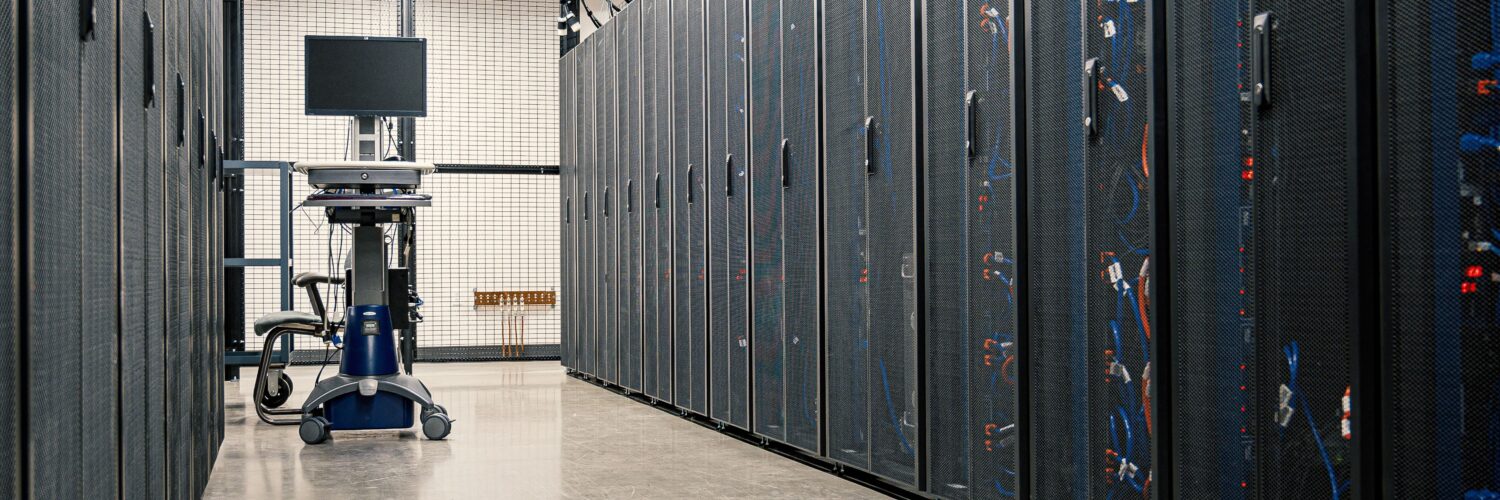
Amazon Web Services (AWS) announced an investment of $5 billion in a data center in Mexico’s Querétaro in 2025. That same year, search engine giant Google said it would develop a data center in Querétaro. Global colocation provider Equinix already operates three major data centers in Mexico’s Querétaro and Monterrey.
A lot is happening across other Latin American countries when it comes to capturing US data center business. In fact, Brazil tops the chart in data investments on the continent. Both Google and AWS have huge data centers in the country. Among other LATAM countries, AWS is investing $4 billion over 15 years in Chile.
Expansion is not limited to just hyperscalers, as existing telecom infrastructure is also being repurposed to meet the growing needs of the digital economy. “There’s a trend in Mexico of growing data centers all over the country,” Felix Tonella, General Manager and Co-founder at Mexico-based nearshore outsourcing company Intugo, told Nearshore Americas. “Telmex has central offices across the country, large buildings that once housed telecom equipment. As that equipment has become much smaller, many of these buildings are being converted into data centers.”
With companies investing billions of dollars in cloud and data-center activity in Mexico, the trend is clear: US companies are leveraging nearshore markets like Mexico, not just for cost-arbitrage but high-tech investments as well. But how ready is LATAM, especially Mexico, both in terms of resources and talent? Our interactions with stakeholders suggest Mexico is gearing up, though there are worries around how AI will impact the job market.
Mexico’s Move Beyond Cost Arbitrage

For many organizations, offshoring has long been the go-to, low-cost solution, but speed and accuracy matter more than anything when it comes to AI solutions. Some industry stakeholders say Mexico is adapting well to AI-enabled outsourcing services. “Organizations are no longer coming to Mexico solely for cost efficiency—they’re looking for partners that can deliver higher-value digital CX services. This includes capabilities, such as AI-assisted customer support, real-time voice language translation and intelligent automation,” Jose Ramirez, President of BPO major The Americas for Alorica, told Nearshore Americas.
His company has been applying AI across both the employee and customer lifecycle: from training and coaching to real-time agent support during interactions.
AI could reshape Mexico’s outsourcing industry as well because developers are going to be in high demand, Peter Ryan, President and Principal Analyst at Canada-based Ryan Strategic Advisory, told Nearshore Americas: “Mexico has some superb engineering schools, and AI will be net positive for the country, in terms of IT roles.”
He sees AI reshaping some of the front-end and back-end operations into more refined AI solution firms.

However, Mexico will not have it easy against some of the serious offshore competitors, says Ryan. “India and Egypt are doing fantastic work, and Mexico will have to work closely with the US to compete for such contracts.”
Is AI a Boon or a Bane for Outsourcing?
Amazon has promised around 7,000 jobs at its Mexican data center in Queretaro and claims to contribute $10 billion to Mexico’s GDP over the next 15 years. Amid growing demand for AI solutions and data services across LATAM, the questions over whether these investments would translate into actual jobs for people are still being debated.
Optimism, however, is being tempered by uncertainty among some employers. Intugo’s Felix says many outsourcing and technology firms in Mexico are becoming more cautious as they assess AI’s long-term impact. “Because of AI, they’re (outsourcing companies) not sure what’s going to happen in the next two, three, four or five years. They’re being very cautious about hiring and very cautious about signing long-term office leases.” He adds that even software-as-a-service companies are also slowing hiring as they wait for greater clarity on how AI will reshape demand.
Some stakeholders are hopeful that rather than reducing demand, AI will strengthen Mexico’s outsourcing industry by expanding the scope, scale, and sophistication of work. “We’re seeing technology increase the overall volume and complexity of customer interactions, while simultaneously elevating the type of support required,” says Ramirez. He thinks that with AI, traditional roles will evolve, but demand for digital CX will continue to grow.
Another key optimism is that AI is still in its early stages, and adoption is in its early stages in Latin America as well. The CI&T research shows that notable progress has been achieved at scale in only a few areas, including customer service, but most opportunities are still untapped, specifically IT automation.
Ramirez says despite the AI conversation taking over, the role of the customer agent is expanding, not diminishing, as they’re becoming more like “self-managed agents”, supported by AI to work more autonomously and effectively. “In Mexico, and across the regions we operate, we continue to hire, train and develop our CX agents to be able to do more multipurpose work, including diverse work types, covering a variety of geographies and languages as well as a wide range of clients and industries.”






Add comment